
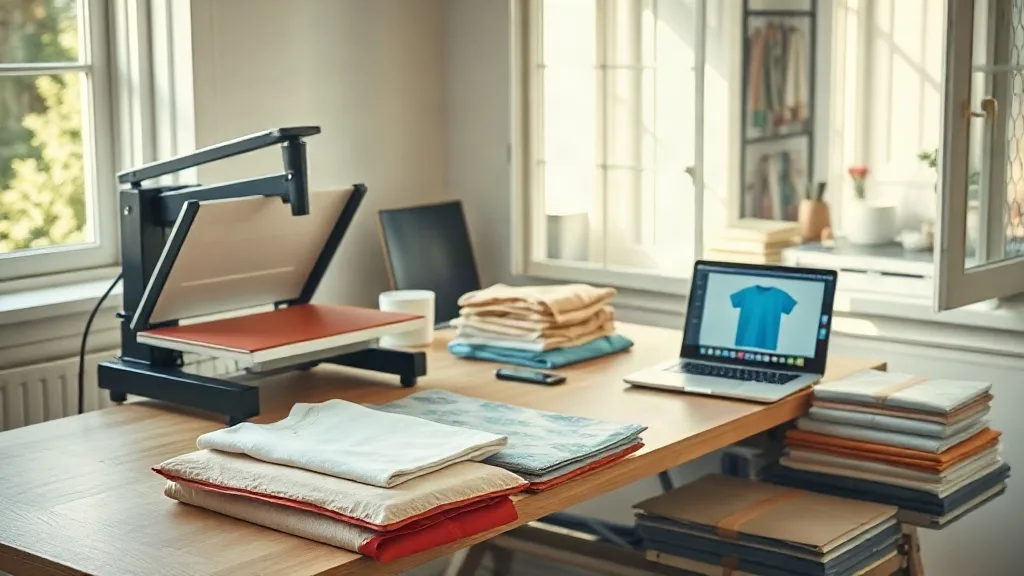
Most people who buy a heat press and a starter pack of dtf transfers imagine selling shirts within a week. A few do. The rest discover that printing is the easy part, and the hard part is figuring out what to print, how many to print, and who actually pays for it. This guide skips the equipment debates and focuses on the business side: how to turn a modest setup into a small-batch apparel operation that earns money without a warehouse, a staff, or a five-figure inventory gamble.
Why Small Batches Beat Bulk Inventory
Traditional screen printing rewards volume. Setup costs per color mean a fifty-shirt run is dramatically cheaper per unit than a ten-shirt run. That math pushed a generation of sellers into storage units full of unsold mediums and larges. DTF changes the equation because there is no screen, no per-color charge, and no minimum that punishes you for testing an idea.
That single structural difference is what makes a lean business possible. You can print one design in five sizes, see what sells, and reorder the winner two weeks later without paying a premium for the second run. The savings are not in the per-unit price, which is often slightly higher than a large screen print order. The savings are in avoided dead stock, and dead stock is what kills small apparel brands.
If you want the technical background on how the film and powder actually bond to fabric, the dtf transfers resource library covers the chemistry and application side in detail. For now, treat the process as a solved problem and focus your attention on the decisions that affect margin.
The Real Cost Math Behind a Single Shirt
Sellers get into trouble when they price from gut feeling. A shirt that costs twelve dollars to make and sells for twenty-five feels like a win until you subtract the platform fee, the shipping label, the poly mailer, and the hour you spent answering messages. Build a simple cost sheet before you list anything.
What to Include in Your Unit Cost
- Blank garment, including shipping to your door
- DTF transfer at your actual size and quantity rate
- Poly mailer or box plus tissue and a thank-you card
- Platform commission and payment processing fee
- A labor allowance for pressing, folding, and packing
- A small buffer for misprints and returns
That last line matters more than people expect. Even with a reliable press, you will ruin a garment occasionally through a shifted placement or a cold spot. If your pricing assumes a perfect success rate, one bad batch wipes out the profit from three good ones.
A Worked Example
Say a blank costs six dollars delivered, a transfer for a full-front design costs two dollars at your order volume, packaging runs one dollar, platform and processing fees take about fifteen percent, and you allow two dollars for labor and buffer. Your true cost on a twenty-five dollar shirt is roughly fourteen dollars and fifty cents. That leaves about ten dollars of contribution. Sell forty shirts a month and you have four hundred dollars. Sell four hundred and the picture changes entirely, which is why distribution matters more than squeezing a dollar out of supplies.
Choosing a Niche You Can Actually Serve
Generic quote shirts compete with thousands of storefronts and a print-on-demand machine that never sleeps. The sellers who grow are usually the ones embedded in a specific community: a local running club, a youth wrestling team, a car meet group, a small church, a dog rescue, a tattoo studio. These buyers are not shopping on price alone. They want someone who understands what the shirt is for.
Being local is a genuine advantage here. When someone searches for dtf transfers near me, they are often looking for fast turnaround on a small run, not the cheapest possible film. If you can offer same-week pickup for a fifteen-shirt team order, you are solving a problem that a large online printer cannot touch.
Questions That Reveal a Good Niche
- Does this group order shirts repeatedly, at least once a year?
- Do they need small quantities that big printers price poorly?
- Is there a deadline attached, like an event or a season start?
- Can you reach the decision maker directly rather than through a marketplace?
- Are they comfortable with a design that is simple enough to print reliably?
Five yeses is a green light. Two or three means keep looking. The best niches tend to be seasonal, because a predictable calendar lets you plan production and marketing around known busy weeks instead of hoping for random orders.
Building a Workflow That Survives Busy Weeks
A solo operation breaks down not from lack of orders but from lack of order. When five clients each send a different file on a Friday afternoon, chaos is guaranteed unless you have a repeatable path from inquiry to shipment.
A Simple Six-Step Pipeline
- Intake: one form that captures design file, garment, sizes, quantity, and deadline
- Proof: a mockup sent for written approval before anything prints
- Gang sheet: group transfers from multiple orders onto one sheet to reduce waste
- Press day: batch by fabric type and color so settings stay consistent
- Quality check: peel test on the first piece of every batch, then spot checks
- Pack and log: photograph the finished order and record the recipe for next time
The gang sheet step is where small sellers leave money on the table. If you have three orders with small left-chest logos, nesting them together uses film far more efficiently than running each separately. Over a month, that habit quietly adds a meaningful percentage to your margin.
Keeping a recipe log is the other underrated habit. Note the press temperature, pressure, and peel method that worked for each fabric and transfer type. When a client returns six months later for a reorder, you are not guessing. You are repeating a known result, which is exactly what professional shops do and hobbyists do not.
Handling the Fabric Variable Without Guesswork
Most failures blamed on the transfer are actually fabric problems. Cotton behaves predictably. Blends with a high polyester content press beautifully but can scorch if you treat them like cotton. Nylon and treated performance wear are the classic trouble cases, and coated or water-repellent finishes will reject adhesion no matter how good your film is.
Before quoting a client on a garment you have not used before, press one test piece and wash it. A single pre-shrunk sample saves you from remaking an entire order and from the awkward conversation that follows. Charge for the sample if you must, or absorb it as a cost of doing business, but never skip it on a new blank.
For a deeper look at how different fibers respond to heat and adhesive, the dtf printing guides break down fabric compatibility in practical terms, including the stretch and recovery behavior that matters on fitted garments.
Pricing, Deposits, and Getting Paid on Time
New sellers underprice for two reasons: fear of rejection and unclear costs. Once you have a cost sheet, pricing becomes a decision rather than a guess. A reasonable starting point for custom small-batch work is a multiple of your true unit cost that leaves room for rework and still feels fair to the buyer.
Take a deposit on any order above a threshold you set, typically half up front for anything requiring custom blanks. This filters out tire-kickers and funds the materials. State your turnaround in business days, not vague promises, and add a buffer for shipping. Under-promising and over-delivering is not a cliche in this business; it is how you get the referral that fills next month.
Common Questions From New DTF Sellers
How many transfers should I order for a first run?
Order enough to cover your confirmed orders plus a small buffer for mistakes, usually ten to fifteen percent. Do not stock deep on an unproven design. The whole advantage of this method is that you can reorder quickly once demand is real.
Can I really compete with large online printers?
Not on price for a hundred identical shirts, and you should not try. Compete on speed, small quantities, local pickup, and personal service. Those are the areas where a large automated shop is structurally weak.
What is the most common reason orders get remade?
Placement and alignment, followed by fabric scorching. Both come from skipping a test press. A simple template and one sacrificial garment per new fabric eliminate most of these losses.
Do I need a physical storefront to sell locally?
No. A clean home studio, a clear intake process, and reliable pickup hours are enough for most small-batch work. Many successful sellers operate entirely through social media and word of mouth in their own town.
How do I keep repeat customers coming back?
Save their artwork, sizes, and press recipe, then reach out before their usual order season. A reminder that their team's shirts are due in three weeks is worth more than any discount code.
Where to Start This Week
Pick one niche, build a cost sheet, and print a single sample for a real person who might buy. That is the entire starting sequence. The equipment questions resolve themselves once orders exist, and the pricing questions get easier once you have real numbers instead of assumptions. Small-batch apparel rewards operators who move quickly, test cheaply, and repeat what works. The press is just the tool. The business is the discipline around it.