
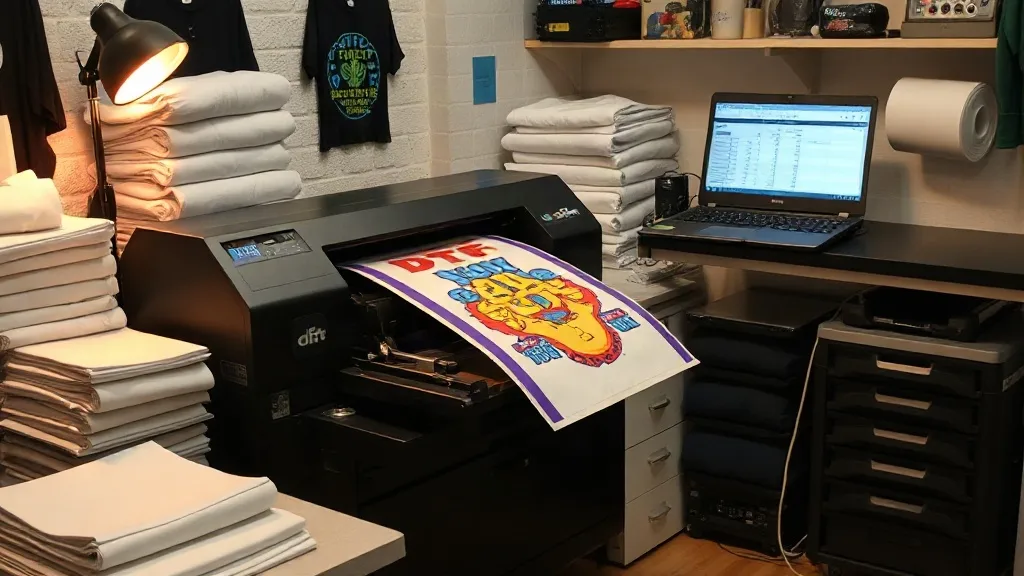
If you run a print shop or decorate apparel, you've likely noticed that DTF transfers have become a go-to method for producing vibrant, durable prints on a wide range of fabrics. But while the technical side of DTF printing gets plenty of attention, the financial side often remains murky. How much does a DTF transfer actually cost? What should you charge? And where do hidden expenses creep in? This guide dives into the numbers, so you can price confidently and protect your margins.
Understanding the True Cost of DTF Transfers
Many shops start by comparing the price of a blank shirt to the price of a DTF transfer and assume the difference is profit. In reality, the cost per transfer includes several components: ink, film, powder, labor, and equipment depreciation. Breaking these down helps you see the full picture.
Ink and Film Costs
DTF ink and film are consumables that directly scale with production volume. A typical A3 film sheet costs between $0.50 and $1.00, while ink usage varies by design complexity. On average, ink costs add another $0.20 to $0.50 per sheet. So for a full A3 sheet, you might spend $0.70 to $1.50 on ink and film alone. Smaller sheets or gang-run layouts can reduce this per-print.
Powder and Consumables
Adhesive powder is another recurring expense. A kilogram of DTF powder costs roughly $20 to $30 and can cover hundreds of prints, so the per-print cost is often under $0.10. Don't forget other consumables like cleaning solutions and waste ink, which add a small but real amount to your overhead.
Labor and Equipment
Labor is often the most underestimated cost. Printing, powdering, curing, and pressing each take time. Even if you automate parts of the process, someone has to load the printer, apply powder, and run the heat press. Calculate your hourly rate and divide by the number of transfers produced per hour. For example, if you produce 20 transfers per hour and pay yourself $20 per hour, that's $1.00 per transfer in labor. Equipment depreciation, maintenance, and space costs should also be factored in; a $5,000 printer depreciated over three years adds about $0.14 per transfer if you produce 10,000 transfers annually.
Pricing Strategies for DTF Transfers
Once you know your costs, you can set prices that ensure profitability. Pricing isn't just about covering costs; it's about perceived value, market positioning, and volume.
Cost-Plus Pricing
The simplest approach is cost-plus: add a markup to your total cost per transfer. A common markup is 2.5x to 3x for wholesale and 4x to 5x for retail. For example, if your cost per A3 transfer is $2.50, you might charge $7.50 wholesale or $12.50 retail. This method guarantees you cover expenses and earn a profit, but it doesn't account for what customers are willing to pay.
Value-Based Pricing
Value-based pricing considers the customer's perceived value. A custom t-shirt with a unique design might sell for $25 to $35 in a retail setting, so the transfer itself could be priced at $8 to $12. This approach works well if you offer design services or fast turnaround. Keep in mind that DTF transfers near me searches often come from customers looking for local convenience, and they may be willing to pay a premium for quick pickup or same-day service.
Volume Discounts
Encourage larger orders by offering tiered pricing. For instance, charge $5 per transfer for 1-9 pieces, $4 for 10-49, and $3 for 50+. This not only increases your average order value but also helps you spread fixed costs over more units. Just make sure the discounted price still covers your variable costs and contributes to overhead.
Hidden Costs That Eat Into Profits
Even with careful calculations, some expenses are easy to overlook. Being aware of them helps you adjust your pricing accordingly.
- Waste and misprints: No process is perfect. Factor in a 5-10% waste rate for misprints, clogged nozzles, or powder application errors.
- Shipping and handling: If you order supplies online, shipping costs can add up. Buy in bulk to reduce per-unit shipping.
- Packaging: If you ship transfers to customers, don't forget mailers, backing boards, and protective sheets.
- Payment processing fees: Credit card fees typically range from 2.5% to 3.5% per transaction.
- Returns and refunds: Even with quality control, some customers may request refunds. Set aside a small percentage for this.
Adding these hidden costs to your base calculation ensures you're not unintentionally working for free.
Maximizing Profitability with Smart Workflows
Efficiency is the key to improving margins without raising prices. Small changes in your workflow can lead to significant savings over time.
Gang Sheets and Nesting
Combine multiple small designs onto a single sheet to reduce film and ink usage. Nesting software can help you arrange designs tightly, minimizing wasted space. This is especially useful for orders with many small logos or left-chest prints.
Batch Production
Instead of printing one transfer at a time, batch similar jobs together. Printing multiple sheets in one session reduces printer startup and cleaning cycles, saving time and ink. Similarly, powder and cure in batches to maximize equipment use.
Invest in Quality Equipment
While a higher-end printer costs more upfront, it often uses ink more efficiently, produces fewer misprints, and requires less maintenance. Over time, the savings can outweigh the initial investment. Look for printers with reliable print heads and good support.
Common Questions About DTF Transfer Costs
How much should I charge for a DTF transfer?
Pricing depends on your costs, market, and volume. A common range is $3 to $8 per transfer for wholesale and $7 to $15 for retail, but calculate your own costs first. Consider your target profit margin and what competitors charge.
Is DTF printing profitable for small shops?
Yes, DTF can be very profitable because it eliminates the need for cutting and weeding vinyl and works on many fabrics. However, profitability hinges on managing consumable costs, labor efficiency, and pricing correctly. Start by tracking every expense and adjusting as you grow.
What is the average cost per DTF transfer?
For an A3 sheet, the material cost (ink, film, powder) is typically $1 to $2. Including labor and overhead, the total cost might be $2 to $4 per transfer. Volume production can lower this significantly.
How can I reduce DTF transfer costs?
Buy supplies in bulk, optimize layouts with nesting, reduce misprints through proper maintenance, and batch production. Also, consider offeringgang sheets to customers as a value-added service.
Do I need to charge extra for larger sizes?
Yes, larger transfers use more ink and film, so adjust your pricing accordingly. A common approach is to set tiers based on size, such as up to A4, A3, and custom sizes.
By understanding your costs and pricing strategically, you can turn DTF printing into a reliable profit center. Keep detailed records, review your numbers regularly, and don't be afraid to adjust prices as your business evolves.