UV DTF transfer design guidelines are essential when turning art into vibrant, durable prints on textiles. Whether you’re new to UV DTF printing or refining your artwork to print workflow, a clear set of DTF transfer design tips helps ensure color accuracy, edge definition, and reliable transfers. This introductory guide covers the full journey—from initial artwork to the finished transfer—emphasizing design choices, color management, file prep, substrate considerations, and practical troubleshooting. By following these guidelines, you’ll minimize errors, shorten production times, and achieve consistent results across garments or fabrics. You’ll also gain a practical sense of how UV DTF printing compares with other DTF methods, while offering actionable tips you can apply today, including substrate compatibility for DTF and color management for DTF transfers.
Viewed through an LSI lens, this topic can be framed as optimizing digital-to-fabric transfers using UV-curable inks on textile films. Alternative terms for the same idea include UV-curable print-on-fabric workflows, textile transfer design best practices, and artwork readiness for garment decoration. Think of this as a color-faithful, edge-precise process that starts with clean vector outlines and ends with durable wear on different fabrics. Whether you call it a UV-based transfer or a fabric-ready print job, the emphasis remains on accurate color reproduction, reliable adhesion, and efficient production. The goal is to establish a repeatable pipeline—from concept sketches to final fabric prints—that suits multiple substrates and inks.
UV DTF transfer design guidelines: achieving color fidelity on fabrics
Effective UV DTF transfer design guidelines help ensure color accuracy, edge definition, and wash durability when printing on textiles. By designing with the curing behavior of UV inks in mind, designers can anticipate hue shifts, highlight brightness, and how opaque inks render on different fabrics. This proactive approach reduces misregistration and improves handling across multiple garments during production.
Integrating a color-managed artwork to print workflow from the start ensures consistent results from first proof to final run. In practice, this means proofing with calibrated monitors, validating color profiles in the RIP, and annotating file layers so the printer reproduces the intended image. Using these guidelines, you can shorten production time while maintaining reliable transfers on varied substrates.
Understanding UV DTF printing vs. traditional DTF methods: design tips for success
UV DTF printing uses UV-curable inks and a different curing approach compared to traditional solvent-based methods, which changes how colors sit and cure on film and fabric. When applying design tips for UV DTF, consider how the transfer film interacts with the ink and substrate, and how edge definition can shift during heat application. These factors influence overall print sharpness and color saturation.
Design tips for DTF transfers often include simplifying fine lines, planning white underbase where needed, and ensuring contrast remains legible after curing. Understanding substrate compatibility for DTF is critical to avoid bleeds and misregistrations, and to choose artwork with appropriate outlines and separations. By adjusting your artwork to print workflow earlier, you can more easily translate designs across fabrics.
Artwork to print workflow: from concept to transfer-ready files
From concept to print, the artwork to print workflow begins with a clear brief and a digital mockup. It guides resolution settings, color space choices, and layer organization to align with the UV DTF printer’s capabilities. A well-documented workflow reduces guesswork and ensures a predictable outcome.
Keep layers logically grouped for separations, maintain safe margins, and select lossless formats for export. The workflow benefits from consistent file naming, documented color profiles, and a standardized RIP setup so the final transfer matches the artwork across multiple garments in the same batch.
Substrate compatibility for DTF: choosing fabrics for best adhesion and durability
Substrate compatibility for DTF is about matching fabric content, weave, and pre-treatment with the chosen inks and adhesive. This ensures adhesion and wash durability while maintaining color integrity. Testing on fabric swatches helps quantify any substrate-driven shifts before a full run.
Selecting the right transfer film, release liner, and adhesive depending on the fabric ensures consistent results. Document observations about stretch, breathability, and care instructions in relation to substrate choices to guide future production decisions.
Color management for DTF transfers: achieving consistency across textiles
Color management for DTF transfers centers on calibrated devices, reproducible ICC profiles, and device link workflows. Implementing a color-managed pipeline helps minimize shifts caused by substrate and light exposure, ensuring the final print matches the proof across garments.
Proofing on actual textiles remains essential; testing white underbase on dark fabrics and adjusting profiles for the fabric’s reflectance will reduce dullness or ghosting. This approach supports a consistent look across runs and aligns with the overall artwork to print workflow and substrate variations.
Troubleshooting UV DTF transfers: common issues and practical fixes
Troubleshooting UV DTF transfers often starts with edge issues and color anomalies that crop up after curing. Common culprits include registration misalignment, improper curing distance, or ink bleed on low-tack transfer films. Identifying the symptom early helps preserve final output quality.
Practical fixes include adjusting cure parameters, validating film and adhesive compatibility, and maintaining a written SOP for different fabrics. Regularly collecting production feedback and updating colour management profiles helps stave off recurring problems across multiple garments.
Frequently Asked Questions
What are UV DTF transfer design guidelines and why are they essential for UV DTF printing color accuracy and durability?
UV DTF transfer design guidelines are the best practices that guide you from initial artwork to the finished print on textiles. They focus on color management, edge definition, layer organization, and substrate considerations to improve color accuracy and durability when using UV DTF printing. Following these guidelines helps you predict how colors will look after curing, minimize misregistration, and achieve sharp detail on fabrics. They also clarify differences between UV DTF printing and other DTF methods, so you can tailor your workflow accordingly.
What artwork to print workflow steps are emphasized in UV DTF transfer design guidelines and DTF transfer design tips?
The artwork to print workflow emphasizes: 1) raster assets at 300 DPI baseline; 2) vector assets scale cleanly with outlines; 3) start in RGB and convert to the UV DTF color profile during RIP processing; 4) include bleed and safe margins; 5) organize layers by color channels and backing; 6) export in lossless formats (TIFF/PNG 16-bit for rasters; PDF/EPS/SVG for vectors).
How does substrate compatibility for DTF influence UV DTF transfer design guidelines?
Substrate compatibility for DTF is central to UV DTF transfer design guidelines. Consider fabric types (polyester blends vs cotton blends), pre-treatments, washability, and how heat and adhesion interact with the chosen transfer film and adhesive. Always test on fabric swatches to confirm color brightness, adhesion, and flexing; adjust workflow accordingly.
How does color management for DTF transfers fit into UV DTF transfer design guidelines?
Color management for DTF transfers is core to UV DTF transfer design guidelines. Use calibrated monitors and soft proofs; apply ICC profiles for your printer, inks, and substrate; use device link if available to minimize color shifts; proof on actual textiles to validate before production; plan white underbase when needed.
What is a practical step-by-step artwork to print workflow for UV DTF transfers within these guidelines?
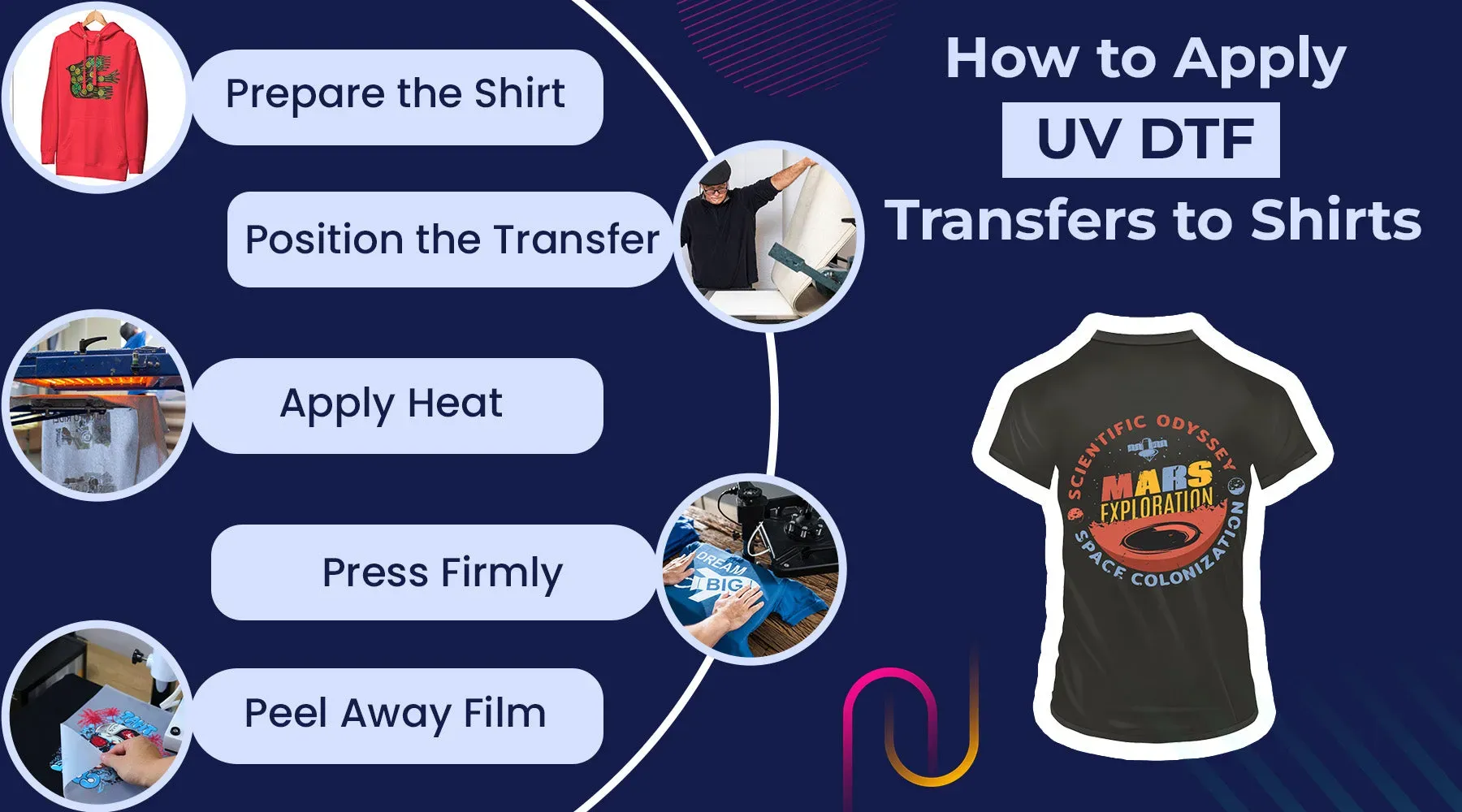
Follow a repeatable workflow: 1) Creative development and proofing with color-managed proofs; 2) File prep and asset organization (separate colors into channels, group layers, ensure flattening preserves edges); 3) RIP and print setup (select textiles profile, correct resolution, substrate and transfer film settings); 4) Printing and curing; 5) Transfer process; 6) Post-transfer finishing (cooling, inspection, color consistency and edge quality).
What common issues are addressed by UV DTF transfer design guidelines and how can they be troubleshooted?
Common UV DTF transfer issues and troubleshooting include: edge bleed or haloing—check registration and edge separation; color shifts after curing—revisit color management and RIP profiles; fading or cracking after washing—verify cure temps/durations and fabric compatibility; incomplete adhesion—verify fabric cleanliness, pre-treatment, and transfer parameters. Following guidelines helps you design with margins for underbase and layer separations to mitigate these issues.
| Topic | Key Points |
|---|---|
| Introduction |
|
| Understanding UV DTF technology |
|
| From artwork to print: preparing your design |
|
| Design principles for UV DTF printing |
|
| From artwork to print workflow |
|
| Color management & calibration |
|
| Substrate compatibility & finishing |
|
| Troubleshooting common issues |
|
| Practical tips for consistent results |
|