DTF printing studio ventures are transforming how designers bring vibrant, durable apparel to life. This approach centers on direct-to-film printing, where designs are printed onto PET film before being transferred to fabrics. With the right DTF inks and a reliable workflow, you can achieve vivid colors on cotton, polyester, blends, and even darker fabrics. Investing in solid DTF printing equipment and a quality heat press helps you maintain consistent results and grow your studio. This introductory overview lays the groundwork for setting up a space, choosing components, and planning for scalable production.
Viewed through an alternate lens, this venture can be described as a film-to-fabric transfer operation that converts digital art into wearable products. Rather than calling it a traditional printer, many entrepreneurs describe it as a direct-to-film transfer workflow that relies on a PET film and specialized inks. The business centers on reliable film transfer media, powder adhesion, and a compatible heat pressing step to seal designs onto textiles. As a concept, think of it as a garment customization studio powered by transfer films, high-precision presses, and color-managed inks.
Mastering the DTF printing workflow for a successful studio
A DTF printing studio thrives when it follows a clear, repeatable workflow: design or import artwork, print onto PET film with DTF inks, dust the film with an adhesive powder, cure the powder, and then transfer the design to fabric using heat and pressure. This direct-to-film printing sequence is the backbone of professional results, offering consistent color fidelity, sharp details, and reliable adhesion across a variety of fabrics. By understanding each step and how it impacts the next, you can optimize throughput while maintaining high-quality outputs.
In a well-run DTF printing studio, standardizing each phase helps reduce errors and waste. Color management, proper drying times, and controlled curing prevent powder fallout and edge curling, ensuring smooth transfers even on darker fabrics. Aligning your workflow with the types of garments you plan to offer—from cotton tees to polyester blends—keeps operations efficient and scalable as demand grows.
Selecting the right DTF printing equipment to fit your budget and space
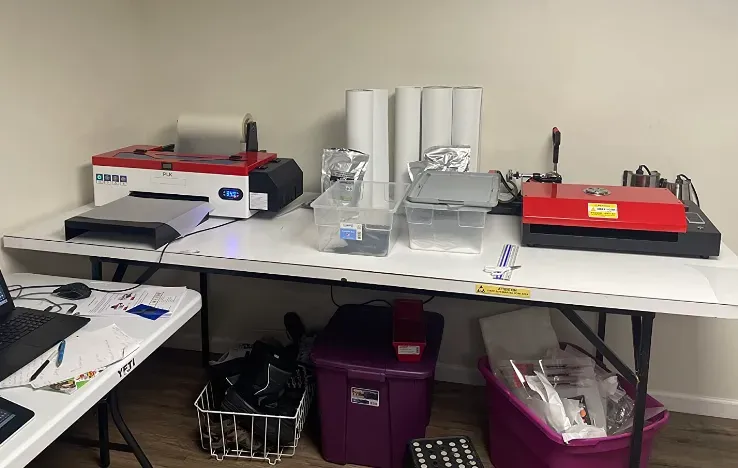
Choosing the right DTF printing equipment is crucial for both performance and bottom-line profitability. A typical setup includes a dedicated DTF printer and DTF inks, reliable transfer films and sheets, a sturdy heat press, a powder shaker, and a curing system. These components, when paired with proper maintenance tools and workspace furniture, form a cohesive system that supports smooth production and high-quality transfers.
Space and budget constraints don’t have to limit your vision. Start with dependable foundations—a robust printer, a dependable heat press, and a steady supply of quality transfer films and powders—and expand as demand and cash flow permit. In a real-world DTF printing studio, investing in durable equipment reduces downtime, minimizes reprints, and improves consistency across orders.
Choosing DTF inks and materials for consistent color fidelity
DTF inks are formulated for film-based printing and the adhesive layer that follows, so color vibrancy, opacity on various fabrics, and drying/curing behavior are all critical factors. When evaluating DTF inks, prioritize color gamut, compatibility with your printer, quick-drying properties to prevent smudging, and robust color profiles supported by the supplier. Pair inks with premium transfer films and reliable adhesive powders to secure clean edges and repeatable results.
Beyond inks, selecting the right film, powder, and adhesive is essential for predictable performance. Premium transfer films improve color accuracy and reduce edge curling, while a consistent adhesive powder ensures clean edges with minimal residue. Work with reputable suppliers who provide color profiles, testing guidelines, and ongoing technical support to maintain uniform quality across orders.
Space planning and safety in a DTF printing studio
Effective space planning supports a logical workflow and safe operation. Design distinct zones for design/prepress, printing, powder application and curing, and final heat transfer, ensuring a smooth handoff from one stage to the next. Adequate ventilation and a dust-free environment are essential to prevent powder contamination and to protect air quality during curing and handling.
Safety and ergonomics should be front and center in a DTF printing studio. Good lighting helps you assess color and detail, while organized storage and spill-resistant work surfaces minimize clutter. Regular maintenance of the heat press, proper handling of powders, and appropriate PPE when needed all contribute to a safer, more productive workspace.
Preparing fabrics and substrates for reliable transfers
The fabric type you choose directly influences transfer performance. Common substrates include cotton, polyester, blends, and performance fabrics, each responding differently to pre-treatments, curing times, and temperatures. Understanding these nuances helps you tailor prepress steps and select suitable fabrics to deliver vibrant colors and durable prints.
Testing on sample fabrics before committing to larger orders is a best practice. Try small runs to gauge adhesion, color vibrancy, and wash durability, adjusting curing times and temperatures as needed. Consider fabric-specific pre-treatments when working with challenging materials to maximize adhesion and minimize cracking or fading after multiple washes.
Building a repeatable workflow for consistent quality and profitability
A repeatable workflow anchors the reliability of a DTF printing studio. This includes meticulous file preparation and color management, calibrated printing parameters, consistent platen temperatures, and defined curing times to minimize powder fallout and maximize transfer quality. Documenting settings for different fabrics creates a library you can reuse for future orders, speeding production and reducing setup errors.
Quality control and cost management go hand-in-hand with a repeatable process. Develop a simple QC checklist that covers print sharpness, color accuracy, powder distribution, and edge integrity. Run test prints on sample fabrics, log results, and refine settings to improve repeatability over time. Track costs per transfer and look for workflow adjustments that boost efficiency without sacrificing quality or reliability, ensuring your DTF printing studio remains profitable.
Frequently Asked Questions
What is a DTF printing studio and what essential DTF printing equipment do I need?
A DTF printing studio is a workspace that uses direct-to-film printing to create custom transfers for apparel. Essential DTF printing equipment includes a dedicated DTF printer with DTF inks, DTF transfer film and sheets, a reliable heat press, a powder shaker and curing system, plus cleaning tools and worktables to maintain an efficient workflow.
How does the direct-to-film printing workflow operate in a DTF printing studio?
In a DTF printing studio, you design artwork, print onto a PET film with DTF inks, dust on adhesive powder, cure the powder, and apply heat and pressure with a heat press to transfer the design to fabric. This repeatable workflow supports fabrics from cotton to blends.
What should I consider when choosing DTF inks for my DTF printing studio?
Choose DTF inks based on color vibrancy, opacity, drying/curing behavior, compatibility with your printer, and available color profiles. Combine with quality transfer films and adhesive powder for consistent transfers.
What features matter most when selecting a heat press for a DTF printing studio?
Look for even temperature distribution, accurate time control, a large platen suitable for garments, and compatibility with various fabrics. A dependable heat press is central to reliable transfers in any DTF printing studio.
Which fabrics and substrates work best with direct-to-film printing in a DTF printing studio?
DTF printing accommodates cotton, polyester, blends, and performance fabrics. Consider fabric pre-treatments and appropriate cure times to maximize color vibrancy and adhesion across substrates.
How should I budget for launching a DTF printing studio to balance equipment, consumables, and operating costs?
Plan for upfront costs of a DTF printer, heat press, transfer films, powders, inks, and curing equipment, plus ongoing expenses like films, inks, maintenance, utilities, and ventilation. Track cost-per-transfer to price jobs profitably and reinvest in quality components.
| Key Point | Summary |
|---|---|
| DTF overview | DTF stands for direct-to-film; this method prints designs onto a PET film using DTF inks, dusts with adhesive powder, cures, and transfers the image to fabrics with heat. It works on cotton, polyester, blends, and even darker fabrics when color management is used. |
| DTF workflow | A typical workflow: design/import artwork → print on PET film with DTF inks → dust with adhesive powder → cure the powder → apply heat and pressure to transfer to fabric. |
| Essential equipment | DTF printer and inks; transfer film and sheets; heat press; powder shaker and curing system; cleaning tools; worktables and storage. Invest in reliable gear to minimize waste and downtime; prioritize a robust printer, dependable heat press, and quality transfer films and powders. |
| Inks & materials | DTF inks should offer color vibrancy and opacity, quick-drying properties, and compatibility with your printer model. Choose premium transfer films and an adhesive powder, and work with reputable suppliers for consistency. |
| Space planning | Create zones for design/prepress, printing, powder application and curing, and heat transfer. Ensure adequate ventilation, good lighting, spill-resistant work surfaces, organized storage, and an ergonomic setup. |
| Fabrics & substrates | Common substrates include cotton, polyester, blends, and performance fabrics. Consider pre-treatments, cure times and temperatures, and testing on sample fabrics before larger orders. |
| Repeatable workflow | Develop a repeatable process for file preparation and color management, printing and curing, powder adhesion and pre-transfer checks, transfer parameters, and post-transfer care. |
| Quality control | Use a simple QC checklist covering print sharpness, color accuracy, powder coating, and edge integrity. Run test prints on sample fabrics and document results to improve repeatability. |
| Budgeting & cost control | Plan for upfront equipment costs and ongoing consumables, rent/utilities and ventilation, software, maintenance, and replacement parts. Track cost-per-transfer and optimize workflow to stay profitable. |
| Safety & best practices | Maintain proper ventilation; use PPE as needed; follow curing times and temperatures to avoid scorching or powder issues; keep a clean workspace; label consumables and manage inventory to prevent shortages. |
| Marketing & growth | Leverage social media to showcase work, build partnerships with local brands, schools, teams, and clubs; offer samples, volume discounts, and customization options to differentiate your DTF printing studio. |
Summary
DTF printing studio success begins with a clear plan that aligns your equipment, workflow, and fabric choices to deliver reliable, high-quality transfers. With the right tools, tested processes, and a focus on consistency, you can turn design ideas into vibrant, durable products that satisfy customers and build your brand. By investing in reliable equipment, optimizing your workflow, and continually testing and refining results, your DTF printing studio can become a sustainable source of creative expression and income.